
Data-Driven Racing Analysis
Best Bet for Horse Racing: A Data-Driven Guide to Smarter Wagers
 Available in US
Data-driven insights for smarter racing bets.
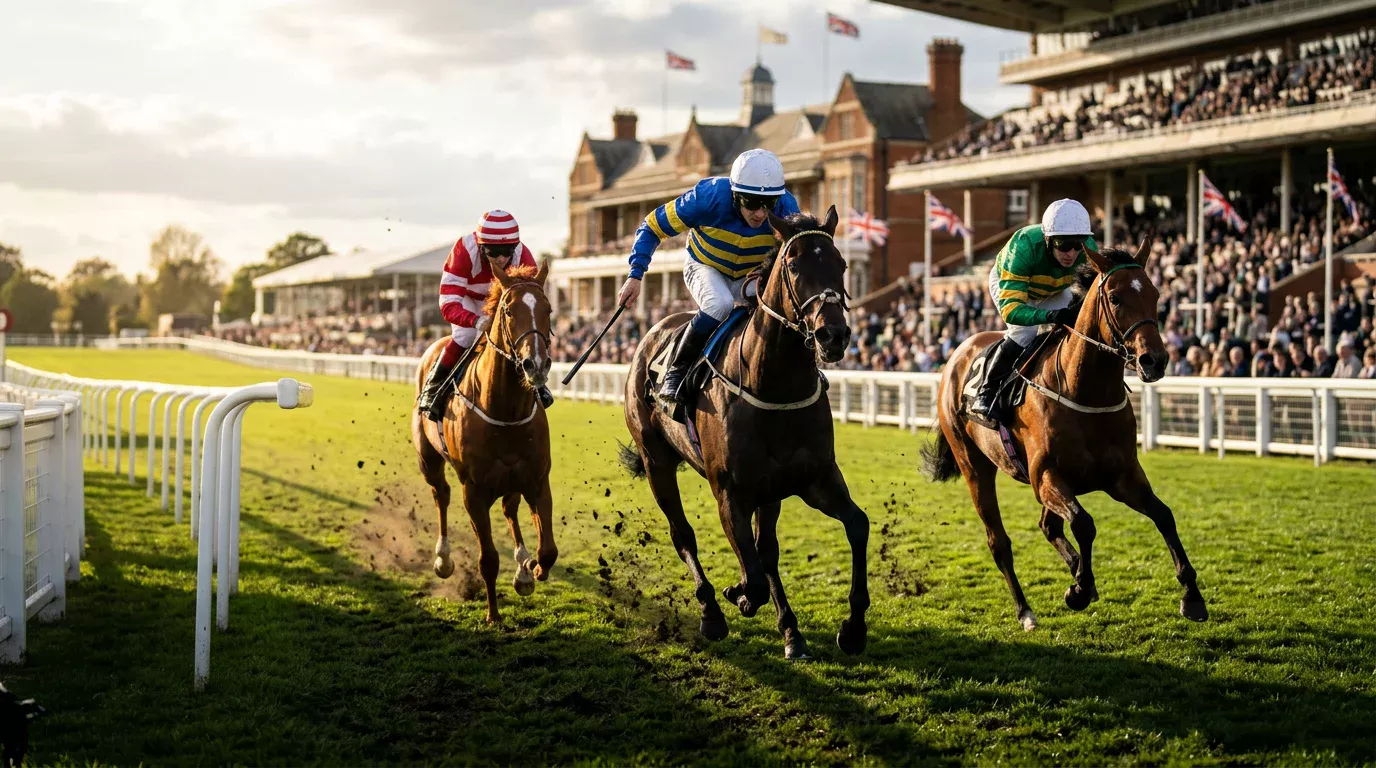
Why Finding the Best Bet in Horse Racing Demands More Than a Hunch
I placed my first horse racing bet in 2017 with the confidence of someone who had read exactly one form guide and watched three YouTube videos. It was a 14/1 shot at Cheltenham, the horse had a nice name, and I liked the jockey's colours. The horse pulled up at the third fence. Nine years later, I have lost count of how many times punters have told me a nearly identical story — different horse, same logic, same result.
The phrase "best bet" gets thrown around racing circles like confetti at a wedding. Tipsters print their NAP of the day, newspaper columns declare "today's best bet," and bookmakers plaster "best odds" across every banner. But a genuinely good bet — one that puts probability on your side rather than against it — has nothing to do with confidence, gut feeling, or the aesthetics of racing silks. It has everything to do with numbers.
This guide is built on the premise that the best bet in horse racing is not a specific horse in a specific race. It is a process: a repeatable method of identifying where the odds offered by a bookmaker exceed the actual probability of an outcome. I have spent the better part of a decade dissecting bookmaker margins, tracking value lines, and stress-testing staking systems across thousands of UK and Irish races. What follows is the framework I use every day — the same framework that separates punters who grind out a long-term edge from those who chase yesterday's losses.
766.7m
Pounds in gross gambling yield from horse racing bets in the remote sector alone — the single largest slice of UK racing revenue.
5.03m
Spectators attended British racecourses in 2025, breaching the five-million mark for the first time since 2019.
36%
Share of the horse racing betting market held by win bets — still the dominant wager type among serious punters.
But the market has shifted. Affordability checks, tightening regulation, tax changes, and a shrinking horse population are reshaping the landscape beneath punters' feet. A guide written two years ago is already out of date. This one is not — every statistic and strategic principle reflects where the market stands right now.
What follows covers what a "best bet" actually means in mathematical terms, how to read a racecard without drowning in data, why your choice of bookmaker affects your returns more than your choice of horse, and where the regulatory wind is blowing. No tips. No tips of the day. Just a method.
The Short Version for Punters in a Hurry
- The "best bet" is not a horse — it is any wager where the odds exceed the true probability. Expected value is the metric that matters, not confidence or gut feeling.
- UK horse racing generated 766.7 million pounds in remote-sector gross gambling yield in the year to March 2025, with over five million racecourse spectators. The market is deep, liquid, and full of opportunity.
- Odds shopping across three to five bookmaker accounts — always with Best Odds Guaranteed active — delivers a measurable uplift in annual returns without requiring any improvement in your selection ability.
- Affordability checks now trigger at 150 pounds in net monthly deposits; 95% of checks clear automatically, but reduced turnover is affecting prize money and field sizes across the sport.
- Form reading, staking discipline, and understanding the regulatory landscape are the three pillars of long-term profitability. This guide covers all three with data, not hunches.
The UK Horse Racing Betting Market in 2026
Last March I sat in the press room at Cheltenham and watched the betting ring do something unusual: turnover on the first day actually climbed. Not by much — a couple of percentage points — but it climbed. That was remarkable because the broader numbers tell a very different story, and understanding the gap between the Festival buzz and the weekday reality is the first step toward making smarter bets.
The UK horse racing and sports betting market is valued at 3.7 billion pounds in 2026, yet the number of operators competing for that money has been shrinking at roughly 3.9% per year since 2020, bringing the total to around 499 companies. Fewer operators means less competition on margins in certain segments, which in turn means the punter needs to work harder to find genuine value. At the same time, total turnover on British racing fell 4.2% in the first three quarters of 2025 compared with the previous year, and a steeper 12.8% compared with 2023. The decline is not evenly distributed. Betting per race on Premier fixtures — the big Saturday cards, the Graded races, the festivals — actually rose 2.7%. It is the bread-and-butter Core fixtures, the midweek cards at Wolverhampton and Catterick, where turnover per race dropped 8.6%.
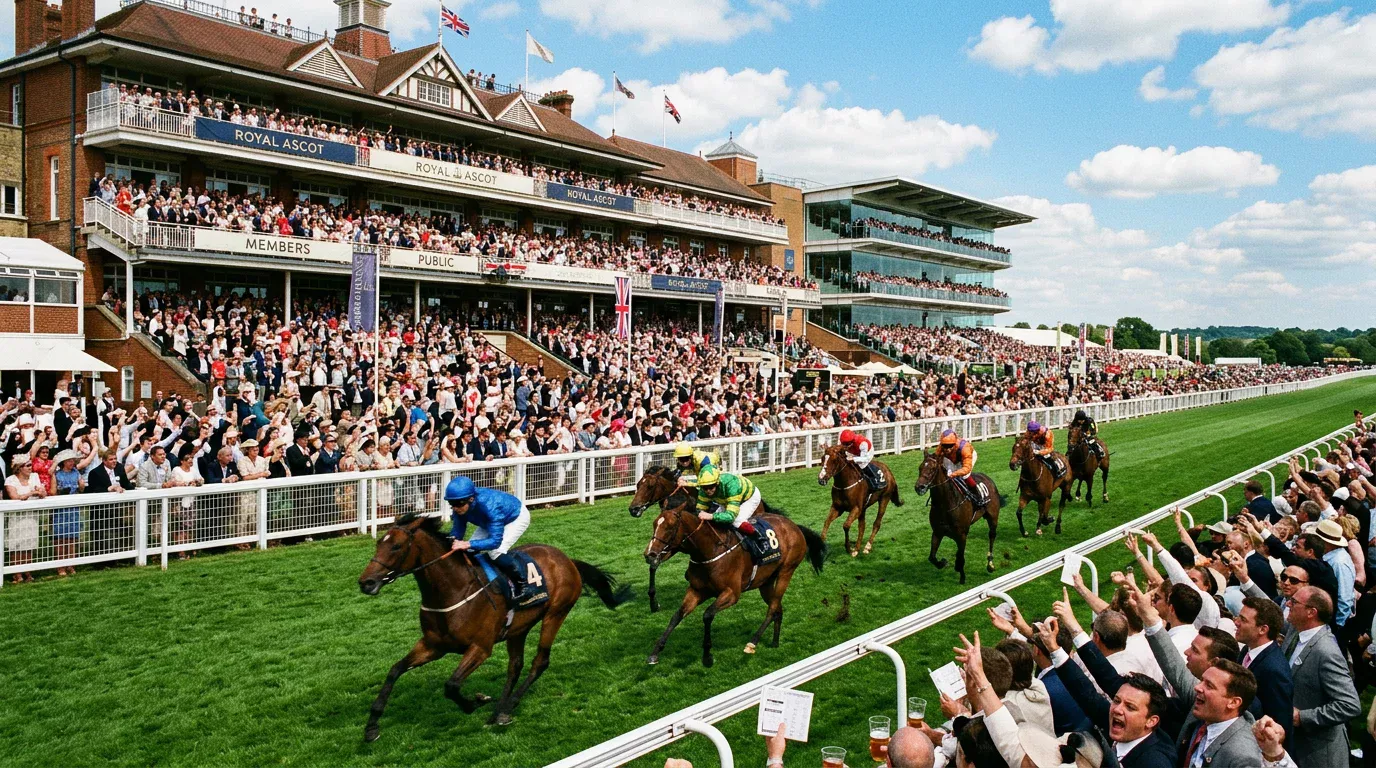
That split matters. If most of the betting public is concentrating its money on fewer, higher-profile races, the odds in those markets get sharper — more money means tighter margins. Meanwhile, the quieter cards become thinner markets where a single large bet can move prices. For a value-oriented punter, both scenarios create opportunities, just different ones.
The Horserace Betting Levy Board collected a record 108.9 million pounds in levy yield for the year ending March 2025 — the highest figure since the levy system was reformed in 2017. That money funds prize money, veterinary science, and the integrity services that keep the sport functioning.
Alan Delmonte, Chief Executive of the Horserace Betting Levy Board, offered a useful lens on the volatility: the last two months of the levy year — February and March 2025 — saw bookmaker gross profits run well above recent norms, driven in large part by a Cheltenham Festival that was particularly unkind to punters. That is worth remembering every time someone tells you the bookmakers are struggling. They are not. Individual results at a four-day festival can swing an entire year's profit line for the industry.
British racing remains the second-largest spectator sport in the country after football, contributing an estimated 4.1 billion pounds annually to the UK economy and employing over 20,000 people across 59 racecourses. This is not a cottage industry propped up by nostalgia; it is a serious economic engine with a betting product at its core.
One consequential policy shift — the November 2025 increase in online sports betting duty from 15% to 25% — explicitly excluded horse racing. That exemption means operators still have relatively more room to offer competitive odds on racing compared with football or tennis. For punters, it translates into marginally better prices at the counter, or at least less pressure on bookmakers to widen their racing margins.
None of this context appears in the typical "best bets today" article. But if you do not understand where the money flows, you cannot understand why certain odds exist or why your 8/1 morning price drifted to 12/1 by post time. The market is the water you swim in.
What Actually Makes a Horse Racing Bet "the Best"?
Ask ten punters what makes a bet "the best" and you will get ten different answers: the strongest form horse, the shortest price, the tipster's NAP, the one that "feels right." I used to argue about this over pints. Now I just show people a spreadsheet.
A bet qualifies as good — genuinely good, not just exciting — when the odds on offer are longer than the true probability of the outcome. That sentence is the entire philosophy in nineteen words. Everything else, from form reading to bookmaker selection, is a tool for measuring that gap.
Expected value is the average amount you stand to win or lose per pound staked if you placed the same bet thousands of times. A positive expected value (EV) means the odds are in your favour over the long run; a negative EV means the bookmaker holds the edge. Every betting decision, whether you realise it or not, is an EV decision.
Suppose you believe a horse has a 25% chance of winning — one in four. Fair odds for that probability are 3/1 (or 4.0 in decimal). If a bookmaker offers you 9/2 (5.5), you are being paid more than the risk warrants. If they offer 2/1 (3.0), you are being paid less. The first is a positive-EV bet. The second is not, regardless of how good the horse looks on paper.
EV calculation example
Your estimated probability: 25% (0.25)
Bookmaker odds: 9/2 (decimal 5.5)
EV = (0.25 x 4.5) - (0.75 x 1) = 1.125 - 0.75 = +0.375
Interpretation: for every 1 pound staked, you expect to net 37.5 pence in profit over repeated identical situations.
The catch, of course, is the phrase "your estimated probability." Nobody knows the true probability of any horse winning any race. What you have is an informed estimate, built from form, conditions, market signals, and experience. The better your estimate, the more often your EV calculations will be right, and the more consistently your bankroll will grow. Get the estimate wrong often enough and positive EV turns negative in a hurry.
This is why I describe the best bet as a process, not a pick. A single selection on a Tuesday afternoon at Lingfield is not inherently better or worse than a Saturday feature at Ascot. What matters is whether the price you got was longer than it should have been. Win bets still dominate the UK racing market at 36%, and there is a reason: they are the cleanest test of whether your probability estimate beats the bookmaker's price. Each-way, forecasts, and accumulators all have their place, but the discipline of evaluating one outcome at one price is where every serious punter starts.
The rest of this guide is organised around the skills you need to make that evaluation reliably: reading form, choosing bookmakers, managing your money, and navigating the regulatory landscape. Each section feeds the same goal — finding spots where the odds are on your side.
Identifying Value: Expected Value and Overround
Overround
The percentage by which the sum of implied probabilities in a betting market exceeds 100%. It represents the bookmaker's built-in margin. A market where implied probabilities sum to 115% has a 15% overround, meaning the bookmaker expects to retain roughly 15 pence of every pound wagered before accounting for result variance.
Overround calculation example
Six-runner race with decimal odds: 3.0, 4.0, 6.0, 8.0, 12.0, 15.0
Implied probabilities: 33.3% + 25% + 16.7% + 12.5% + 8.3% + 6.7% = 102.5%
A fair market sums to 100%. This market sums to 102.5%, giving the bookmaker a 2.5% overround. In practice, most UK racing markets run at 110-120%, meaning the bookmaker's built-in margin is 10-20%.
Understanding overround tells you how much of a head start the bookmaker has before the race even begins. Identifying value means finding individual prices within a market where the bookmaker's implied probability is lower than your own assessment — effectively exploiting the gap the overround creates unevenly across runners. The full mechanics of expected value calculation and how to apply it race by race are covered later in this guide and in the dedicated strategy breakdown.
Reading Form at a Glance
Years ago, a trainer I know — small yard, fifteen horses, never makes the headlines — told me something I have never forgotten: "The form book tells you what happened. Your job is to work out why." That distinction is the difference between reading form and understanding it.
A racecard compresses an enormous amount of information into a small space: recent finishing positions, distances beaten, course and distance records, going preferences, trainer and jockey combinations, Official Ratings, headgear changes, weight carried. The temptation is to fixate on the most recent result — the horse won last time, so it must be in form. But a horse that won a weak Class 6 handicap at Wolverhampton on Tapeta by a neck is not necessarily ready to compete in a Class 4 at Newbury on soft ground over two furlongs further.
A quick primer on form figures: the sequence of numbers and letters next to a horse's name represents finishing positions in most recent races, read left to right from oldest to newest. A "1" means a win, "2" a second place, "0" means finished outside the first nine, "F" is a fall, "P" a pulled up, "U" an unseated rider, and a "/" separates different seasons. So a horse showing 32/1F04 won its third start of the current season, fell last time out, and has been inconsistent.
The real edges in form reading come from context. The gap between Premier fixtures and Core fixtures — where betting turnover tells two very different stories — mirrors a quality gap in the horses themselves. A horse stepping up from a Core-level race to a Premier Saturday card faces a very different challenge, and the market does not always price that transition accurately.
Going conditions, class changes, distance experiments, first-time headgear, and jockey bookings that signal trainer intent — these are the variables that separate a surface-level reading from a genuine assessment of probability. Each one deserves its own analysis, and I have written a dedicated guide to reading horse racing form that walks through every column on a racecard with worked examples.
Form tells you what a horse can do — but the price you get depends on where you place your bet.
Choosing a Bookmaker That Works for You
I once logged every bet I placed over six months across four different accounts — same selections, same stakes, the only variable was which bookmaker I used. The difference between the best-performing account and the worst was 11% on total returns. Not from one big race. Eleven percent across hundreds of bets, purely from choosing where to click.
Your choice of bookmaker is not a loyalty decision. It is a financial one. The UK market is home to dozens of licensed operators, and they do not all price the same race the same way. Flutter Entertainment — the parent company behind several of the largest UK-facing brands — reported group revenue of 15.91 billion dollars for the 2025 financial year, a 17% year-on-year increase. William Hill commands the largest share of paid search visibility in UK sports betting at 37.83% of PPC clicks. These are not charities. They are sophisticated businesses with different margin strategies, different risk appetites, and different promotional calendars.
The European Commission once described the relationship between racing and betting as "a unique interdependency that goes back over 200 years." That interdependency means bookmakers invest heavily in racing products — but it also means they know the product inside out. Beating them requires understanding what they optimise for and finding the gaps.
| Feature | What to look for | Why it matters |
|---|---|---|
| Best Odds Guaranteed | BOG from early morning, high max payout, covers Lucky 15s | Eliminates downside of taking an early price that shortens |
| Overround / margin | Markets summing closer to 105-110% rather than 115-120% | Lower margin = more of your stake goes toward potential returns |
| Live streaming | Covers UK and Irish racing, low delay, funded-account threshold | Watching races live feeds in-play decisions and post-race analysis |
| Market depth | Ante-post, forecast, tricast, and special markets available | More market types = more ways to express a view on a race |
| Cash-out and in-play | Partial cash-out, in-running prices, minimal delay | Flexibility to manage risk mid-race or mid-afternoon |
The margin-first operator
Tight overrounds, competitive early prices, BOG from 8am or earlier. May offer fewer promotions but consistently better base odds.
The feature-rich operator
Live streaming of every UK and Irish meeting, detailed racecards, integrated form data, and in-play markets with low latency.
The promotion-heavy operator
Regular extra-place offers, enhanced odds on festival races, free-bet incentives. Value here is episodic — great on specific days, average on others.

No single operator excels at everything. The practical solution is holding accounts with several and placing each bet where the terms are most favourable for that specific wager. A deep-dive comparison of what separates good betting sites from great ones — including how to evaluate margins, mobile experience, and UKGC licensing — is in the best horse racing betting sites review.
Best Odds Guaranteed: Why It Is Non-Negotiable
Best Odds Guaranteed (BOG) is a bookmaker promise: if you take an early price on a horse and the starting price (SP) is higher, the bookmaker pays out at the bigger number. Your odds can only improve, never worsen. It is the single most punter-friendly feature in UK racing and the one I refuse to bet without.
Here is a scenario I encounter almost weekly. A horse is priced at 5/1 in the morning. I back it. By 2pm the money comes for it, the price shortens to 3/1, but then a late drift pushes the SP out to 6/1. Without BOG, I collect at my original 5/1. With BOG, I collect at 6/1 — a 20% bump on my return for doing absolutely nothing different.
The reverse matters too. If the SP comes in shorter than my early price, I still keep my 5/1. BOG is a one-way ratchet. It rewards you for taking a position early without punishing you if the market moves against you.
Not all BOG terms are equal. Some operators start BOG from the moment markets open; others only activate it from 8am or 9am on race day. Maximum payouts vary — one bookmaker might cap BOG at 500 pounds in additional winnings; another has no publicised cap but applies discretion on large bets. A few exclude certain bet types: Lucky 15s, forecasts, or bets placed via mobile apps might not qualify.
My rule is simple: never place a pre-race bet on UK or Irish racing without BOG. If an operator does not offer it, that operator does not get the bet. The compound effect over hundreds of bets is too significant to ignore — it is a structural advantage the bookmaker absorbs as a cost of customer acquisition, and you should treat it as exactly that.
The Case for Odds Shopping Across Multiple Accounts
The single easiest way to improve your racing returns requires zero skill in form reading. Check the price at more than one bookmaker before you bet.
I tracked this across my own betting for a full calendar year. On 73% of bets, at least one of my four active accounts offered a meaningfully better price — enough to affect my return by at least 5% on that individual wager. Over twelve months, always taking the best available price was worth an extra 14 points of profit to level stakes. That is not theory. That is a bank statement.
The reason prices differ is straightforward: bookmakers do not price races identically. Each has its own risk model, its own liabilities on each runner, and its own commercial incentives. One might be long on a particular horse and happy to offer 7/1 while another, already exposed, pushes the same horse out to 15/2. Price shopping exploits these discrepancies without requiring any view on the race itself — you simply take the highest number.
Do
- Maintain three to five active accounts to maximise the chance of catching the best price
- Check odds comparison sites before every bet — the thirty seconds spent looking will pay for itself
- Combine price shopping with BOG: take the best early price and let the guarantee protect your downside
- Use odds comparison tools for ante-post markets, where price gaps tend to be even wider
Don't
- Assume your "main" bookmaker always has the best price — loyalty in betting is a tax you pay on returns
- Ignore decimal differences: 4.5 vs 4.0 on a 50-pound bet is 25 pounds — real money over a season
- Open accounts with operators just for welcome offers and never use them again — dormant accounts add nothing
- Chase the best price on in-play markets where latency makes comparison impractical
The mechanics of odds comparison — which tools work best, how to read market movers, and when the starting price is actually better than the early price — are explored fully later in this guide.
Betting Strategy: From Staking Plans to Bankroll Discipline
Three years into my betting career I had a problem. My selection process was solid — my hit rate on value bets was hovering around 28%, which was profitable at the average odds I was taking. But my bank was not growing. It was flat, sometimes dipping, never compounding. The issue was not what I was backing. It was how much.
Strategy in horse racing betting is not just about picking winners. It is about sizing bets correctly, protecting your bankroll during the inevitable losing runs, and having the discipline to stick to a plan when every instinct screams at you to chase. The Horserace Betting Levy Board's data paints the backdrop clearly: betting turnover per race has dropped roughly 19% since 2021/22. Richard Wayman, the BHA's Director of Racing, attributed much of that decline to the impact of affordability checks, which he said have "resulted in people either stopping betting or placing their bets with unlicensed operators." The punters still in the regulated market need to make every pound count.
A staking plan determines how much you bet relative to your bankroll. Level stakes keeps it simple: the same amount on every bet. Percentage staking adjusts the bet size as your bankroll grows or shrinks, protecting you from ruin during cold streaks. The Kelly criterion attempts to calculate the mathematically optimal bet size based on your estimated edge, but it demands accurate probability estimates and punishes overconfidence harshly.
Five-step routine before placing any racing bet
- Confirm the bet qualifies as positive expected value based on your form assessment and the available odds
- Check odds across at least three bookmakers and select the best price
- Verify that BOG is active for this bet type and race
- Calculate your stake according to your staking plan — not your gut
- Record the bet in your tracking sheet: date, race, horse, odds taken, stake, and your rationale

That last step — the tracking sheet — separates punters who improve from those who repeat the same mistakes for years. Without a written record, you cannot evaluate your strategy. You do not know your true strike rate, your average odds, or your ROI by race type. I have a spreadsheet dating back to 2018, and the patterns in the data have changed my approach at least four times.
The mechanics of each staking plan — how to set up a dedicated betting bank, how to handle drawdowns without panicking, and when to reassess your entire approach — are laid out in the betting strategy guide.
Strategy tells you how much to bet — but the type of bet you choose shapes the maths entirely.
Each-Way Betting: When Hedging Pays Off
The Grand National. Thirty-nine runners, soft ground, fences the size of garden sheds, and your horse finishes third at 20/1. With a win-only bet, that is a loss. With an each-way bet, you have just landed a handsome return on the place part. That is the appeal of each-way betting in a single sentence: it gives you a second chance to profit when your selection runs well but does not quite win.
An each-way bet is two bets in one. Half your stake goes on the horse to win; the other half goes on the horse to place — usually first, second, or third, though the number of paying places varies by field size and race type. The place part pays at a fraction of the win odds, typically one-quarter or one-fifth.
Each-way return calculation
Horse odds: 10/1. Stake: 10 pounds each way (20 pounds total).
Place terms: 1/4 odds, three places.
Horse finishes second.
Win part: loses (0 pounds returned).
Place part: 10 pounds x (10/4) = 10 x 2.5 = 25 pounds returned + 10 pound stake = 35 pounds.
Net result: 35 - 20 = +15 pounds profit despite the horse not winning.
Each-way betting comes into its own in large-field handicaps — races with 16 or more runners — where the uncertainty is highest and the place terms are most generous. In these situations, a well-fancied horse at double-figure odds can deliver a solid return even without winning. Win bets may dominate the market at 36%, but each-way accounts for 22% and that share holds steady for a reason: it is the bet type that best suits the chaotic, unpredictable races that draw the biggest audiences.
But each-way is not always the right call. On short-priced horses — anything under about 5/1 — the place part of the bet often pays so little that it barely covers the extra stake. In small fields of five or six runners, you are paying for insurance you rarely need. Each-way is a tool with specific use cases, not a default mode.
The scenarios where each-way outperforms win-only, where it costs you money, and how each-way doubles and Lucky 15s alter the calculation are all covered in the each-way betting guide.
Knowing which bet type to use is one half of the equation — knowing where the best price lives is the other.
Why Odds Comparison Tools Are Essential
I have a rule pinned above my desk: "The price is the bet." It sounds reductive until you consider that two punters can back the same horse in the same race, one at 5/1 and one at 7/1, and one of those bets is profitable over time while the other is not. The horse either wins or it does not — but the return when it wins depends entirely on the number you locked in.
Odds comparison tools aggregate real-time prices from dozens of bookmakers into a single grid, letting you see at a glance where the best price sits. The process takes thirty seconds. The effect, compounded across a year of betting, is not marginal. I documented a 14-point uplift in profit by always taking the best available price over twelve months — and that was across mid-range odds. For punters who regularly back longer-priced horses, the percentage gains are even larger because the absolute gap between best and worst price tends to widen as odds increase.
What odds comparison also reveals is the shape of the market. When a horse's price contracts across all bookmakers simultaneously — a "market mover" — that signals significant money arriving, often from informed sources. When one bookmaker's price drifts while others hold, that might be a liability issue unique to that firm. Learning to read these patterns overlaps with form analysis: the market is telling you what other people think, and sometimes other people know things you do not.
Price comparison matters for pre-race bets, ante-post markets, and even exchange odds. It does not work well for in-play betting, where latency between sites and the speed of price changes make real-time comparison impractical. For everything else, it is non-negotiable.
A full walkthrough of how to use comparison tools, interpret market movers, and decide when the starting price is actually the better deal is in the odds comparison guide.
Affordability Checks and the 2026 Betting Landscape
No topic in UK horse racing betting generates more heat and less light than affordability checks. I have sat in rooms where trainers, bookmakers, and regulators have argued about this for hours, each side armed with data that somehow proves the opposite of what the other side's data proves. Here is what is actually happening, stripped of the politics.
Since February 2025, the threshold for triggering enhanced financial checks with UK-licensed bookmakers dropped from 500 pounds to 150 pounds in net monthly deposits. Cross that line and the operator is required to run a check — usually through a credit reference agency — to verify that your level of gambling is consistent with your financial circumstances. The Gambling Commission reports that roughly 95% of the 530,000 checks conducted during the pilot phase passed "frictionless," meaning the punter did not even notice the process happening in the background.
Richard Wayman, the BHA's Director of Racing, was blunt about the consequences: the drop in betting revenue was headed by the impact of affordability checks, which have resulted in people either stopping betting or placing bets with unlicensed operators where these checks do not take place.
The Gambling Commission pushed back, noting that no formal "affordability" checks are mandated through regulation — the checks are risk-based financial assessments, and the Commission questioned whether the BHA's evidence supported the claim. That semantic disagreement masks a real-world impact: the Jockey Club estimated potential damage to the racing industry at 250 million pounds over five years. One major operator reportedly lost 94% of its VIP customers after introducing stricter verification procedures.
Despite the friction, 95% of financial checks during the pilot phase cleared automatically through credit agency data — meaning the vast majority of everyday punters experienced no disruption at all.
A Right to Bet survey found that 40% of punters would consider moving to unregulated operators in response to mandatory checks, while 96% believed the decision about how much to gamble should remain personal. Those are opinion numbers, not behaviour numbers — but they signal deep frustration.
For the average punter betting within their means, the practical impact is minimal — a soft credit check on your file that does not affect your credit score. For higher-staking recreational punters, the experience can be more intrusive: document requests, deposit limits imposed pending verification, and occasionally accounts frozen until paperwork clears.
The broader consequence for all punters is indirect. Reduced betting turnover means less revenue flowing into the Levy Board, which funds prize money. Lower prize money risks smaller fields, which means fewer runners, thinner markets, and ultimately less attractive betting opportunities. The Horserace Betting Levy Board's own language acknowledged the trend: risk-based and other financial checks are said to be having a particular effect on higher-staking customers. The cycle from regulation to reduced revenue to reduced racing quality is not hypothetical. It is measurable, and it is already happening.
Major Festivals: When the Best Bets Appear
If the everyday racing card is where you hone your process, the big festivals are where it pays off. I clear my diary for three weekends a year — Cheltenham in March, Aintree in April, and Royal Ascot in June — because these meetings bring swollen fields, deep market liquidity, and the widest opportunities for value.
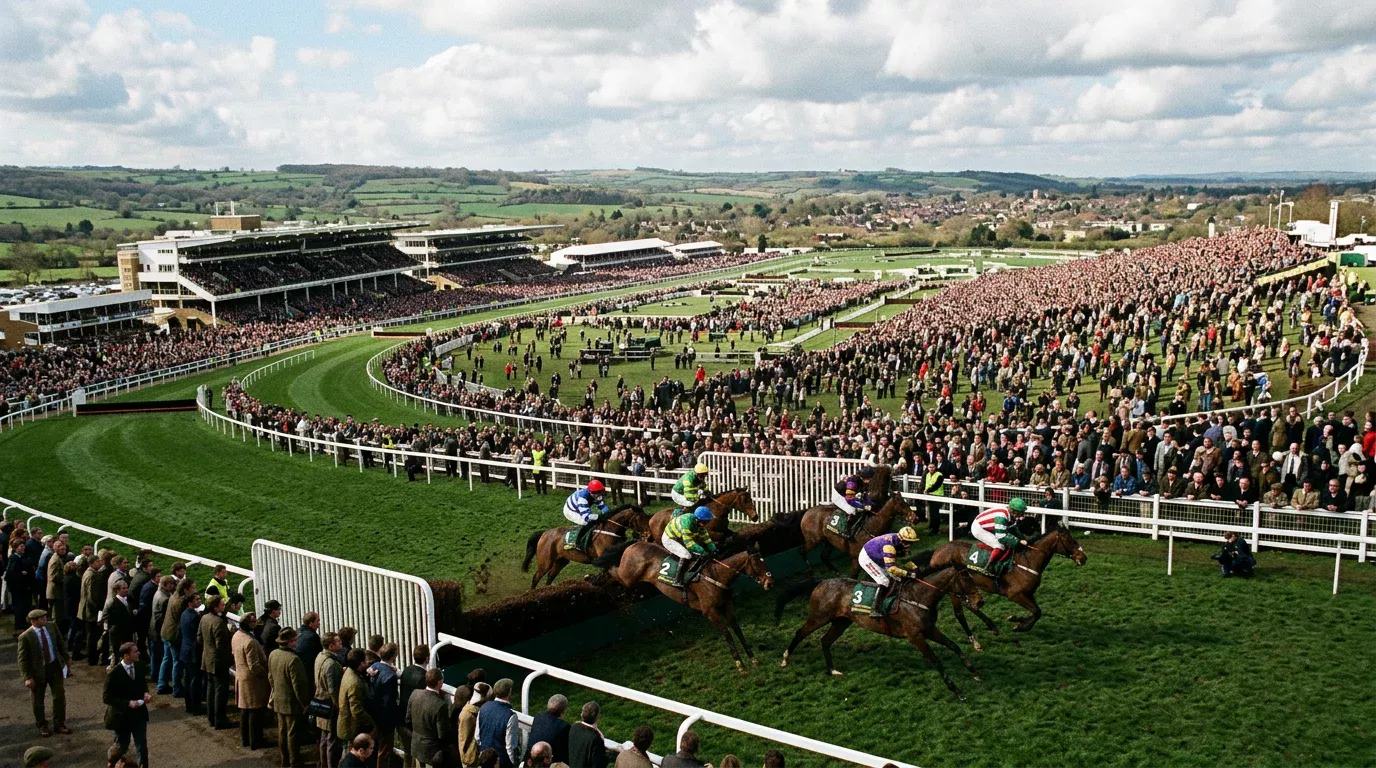
Attendance figures tell part of the story: British racecourses drew 5.031 million spectators in 2025, surpassing the five-million threshold for the first time since 2019. A huge share of that footfall concentrates around the major festivals. But the betting story is even more striking. Participation in horse racing wagering surged to 7% of the adult population during the April-July 2025 window — the stretch that covers the Grand National and Royal Ascot — before falling back to 4% by October. That seasonal spike means the markets are flooded with casual money during festival weeks: punters betting on names, colours, and newspaper tips rather than form.
Casual money moves prices. When millions of pounds pour in on a horse because a celebrity tipped it on morning television, the market distorts. Prices on the popular selections shorten beyond their true probability, while the less fashionable runners — often the ones with genuine claims — drift to more generous odds. Festivals are the best hunting ground for value precisely because they attract the least analytical money.
Cheltenham Festival
Four days in March, 28 races, the heartbeat of National Hunt racing. The ante-post markets open months in advance, and the early prices can offer significant value before the trials narrow the field. The Champion Hurdle, Gold Cup, and Stayers' Hurdle are the marquee events, but the handicaps on the undercard often hide the best each-way opportunities.
Grand National
The single most-bet-on race in the UK calendar. Up to 40 runners, National fences, and a handicap structure that gives every horse a theoretical chance. Each-way betting dominates for good reason — bookmakers typically pay four, five, or even six places, and the large field means upsets are not just possible but frequent.
Royal Ascot
Five days in June that showcase the best of Flat racing. Group 1 races attract international runners, which can create pricing uncertainty as UK bookmakers weigh unfamiliar form from overseas. The big-field handicaps on the midweek days — the Royal Hunt Cup, the Wokingham — are some of the most competitive puzzles in the racing calendar.
Each festival has its own rhythm. Cheltenham rewards patient ante-post punters who identify trial-race form early. The Grand National rewards each-way discipline and an understanding of how fences filter the field. Ascot rewards draw analysis and awareness of international form. Approach each one with a plan, not just enthusiasm.
Frequently Asked Questions About Horse Racing Bets
What is the best bet you can make on horse racing?
The best bet is not a specific horse — it is any wager where the odds offered exceed the true probability of the outcome. A 5/1 shot that you assess as having a 25% chance of winning (fair odds 3/1) is a good bet. A 2/1 shot with the same probability is not. The process of identifying these gaps through form analysis, odds comparison, and market awareness is what separates profitable punters from recreational ones.
How do I find value bets in horse racing?
Value exists when a bookmaker's implied probability for a horse is lower than your own estimate. Start with form analysis to build a probability estimate, then compare that estimate against available odds across multiple bookmakers. If a horse you rate as a 20% chance is priced at 6/1 (implied probability 14.3%), the gap represents value. Consistently finding these gaps requires disciplined form reading, understanding of going and class, and use of odds comparison tools.
What does Best Odds Guaranteed mean and why does it matter?
Best Odds Guaranteed (BOG) is a bookmaker commitment to pay the higher of your early price or the starting price. If you back a horse at 4/1 in the morning and it goes off at 6/1, you collect at 6/1. The feature functions as a one-way ratchet on your returns — your odds can only improve, never worsen. Over hundreds of bets, BOG delivers a measurable uplift in total returns and should be treated as a baseline requirement for any bookmaker you use regularly.
Is each-way betting better than win-only for horse racing?
Neither is inherently superior — they suit different situations. Each-way excels in large-field handicaps (16+ runners) where longer-priced selections have a realistic chance of placing, and where the place terms (typically 1/4 or 1/5 odds) return enough to justify the extra stake. In small fields or at short odds, each-way is usually poor value because the place part pays very little. The choice depends on field size, odds, and place terms, not on a blanket preference.
Which UK bookmaker offers the best odds for horse racing?
No single bookmaker consistently offers the best odds across all races. Prices vary by runner, by meeting, and by the operator's liability position on each market. The most effective approach is holding accounts with three to five licensed bookmakers and checking odds comparison tools before every bet. The bookmaker with the best price on a Cheltenham handicap may not be the same one offering the best price on a Tuesday card at Kempton.
What is the difference between Flat and National Hunt betting?
Flat racing runs from April to October on level ground without obstacles, emphasising speed, draw position, and class. National Hunt (jumps) racing runs primarily from October to April over hurdles and fences, where stamina, jumping ability, and ground conditions play a bigger role. The two codes require different form-reading approaches: Flat punters focus on draw bias and speed ratings, while National Hunt punters weigh ground preferences, jumping records, and trainer patterns at specific courses. Many punters specialise in one code to build deeper expertise.
How do affordability checks affect horse racing betting in 2026?
Since February 2025, UK-licensed bookmakers trigger enhanced financial checks when a customer's net monthly deposits exceed 150 pounds. Around 95% of checks during the pilot phase cleared automatically through credit reference agencies, causing no disruption. For higher-staking punters, the process can involve document requests and temporary deposit limits. The wider effect is a reduction in overall betting turnover, which feeds through to lower industry revenue and potentially reduced prize money — a concern for the long-term quality and competitiveness of UK racing.
