
Epsom Derby Betting Tips: Camber, Stamina and the Classic Form Angles
 Available in US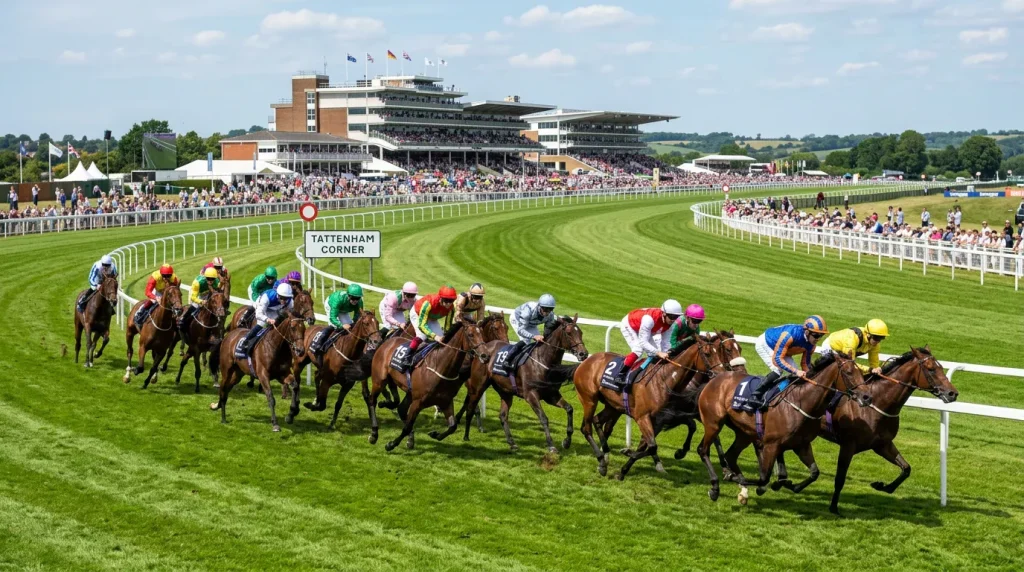
Contents
The Derby Tests Unproven Three-Year-Olds on the Most Unique Track in Flat Racing
I remember watching the 2011 Derby and thinking Pour Moi had no right to win. He had raced just three times, had never gone a mile and a half, and was making only his seasonal debut. Then he came wide into the straight, handled the famous Epsom camber without flinching, and got up on the line. That race crystallised something I have believed ever since: the Derby is not a standard Group 1. It is a test of adaptability as much as ability, and the form book only takes you so far.
Racecourse attendance in Britain passed 5.031 million in 2026, and the Derby remains one of the single biggest-draw fixtures on the calendar. It is also one of the hardest races to bet on. The field consists entirely of lightly raced three-year-olds stepping up to a mile and a half for the first time in most cases, on a track that bears no resemblance to any other course in the country. The usual rules of form analysis — class, distance proven, course form — are largely irrelevant because almost none of the runners have raced over the trip or at the venue before.
Epsom’s Unique Layout and Its Effect on Results
Epsom is not a flat track in any meaningful sense. The first five furlongs climb uphill at a gradient that tests a horse’s respiratory system before a single competitive move has been made. The field then swings left-handed around Tattenham Corner on a pronounced downhill camber that requires balance, agility and an almost instinctive ability to stay upright while accelerating. Horses that are big, scopey gallopers on Newmarket’s galloping straight mile can look clumsy and unbalanced on the Epsom gradients.
What this means for the bettor is that trial form must be interpreted through the lens of Epsom’s demands. A horse that won a Lingfield Derby trial by six lengths on a flat, left-handed all-weather track has shown ability but not necessarily the physical traits needed for Tattenham Corner. A horse that won less impressively at Chester — a tight, undulating, left-handed track — may have demonstrated more of the agility that Epsom rewards. I weight Chester and Sandown trials more heavily than Lingfield and Newmarket in my Derby assessments, not because the racing is better but because the tracks share more of Epsom’s physical challenges.
The draw plays a minor role in the Derby compared with sprint races, but pace is critical. The Derby is often run at a moderate early pace because jockeys are conscious of the hill and the bend, which means that horses positioned in the first half of the field heading down the hill tend to be closest to the rail and the shortest route home. Closers drawn wide face a geometry problem that adds ground at the worst possible moment.
Historical Derby Form Trends: What Winners Share
Over the last two decades, Derby winners share certain traits that repeat often enough to form a betting filter. Total prize money in UK racing reached £194.7 million in 2026, and the Derby’s share of that pot ensures it attracts the best-bred three-year-olds in training. Within that elite group, winners tend to fit a specific profile.
First, they almost always have at least one run in the calendar year before the Derby. Horses appearing at Epsom on their seasonal debut have a poor record. The race demands fitness and sharpness that a single gallop at home cannot replicate. The spring trials — the Dante at York, the Dee Stakes at Chester, the Lingfield Derby Trial — exist partly for this purpose, and horses who use them tend to arrive at Epsom physically harder than those who skip them.
Second, stamina in the pedigree matters more than raw speed. The Derby is run over a mile and a half, but the undulations make it ride like a mile and six furlongs. Sires with proven stamina influence — Galileo, Frankel (over middle distances), Sea The Stars — dominate the winners’ roll. A horse by a pure miler sire has to be exceptional to overcome the stamina demands of the final two furlongs uphill to the finish.
Third, the trainer’s record at Epsom carries weight. Aidan O’Brien, John Gosden and Charlie Appleby have dominated recent renewals, and their runners tend to be specifically prepared for the unique demands of the course. That does not mean blindly backing the big yards, but it does mean treating their runners with more respect than their morning price might suggest.
Each-Way Angles in a Small but Competitive Field
The Derby typically attracts between eight and sixteen runners, which affects each-way terms. With fewer than sixteen runners, most bookmakers pay three places rather than four, and the each-way fraction drops accordingly. In a twelve-runner Derby, each-way value is thinner than in a twenty-runner handicap, but it exists in specific scenarios.
The best each-way Derby plays are horses priced between 12/1 and 25/1 that have a clear stamina profile but lack the proven class of the market leaders. These types may not win but can stay on strongly in the final furlong when the hill takes its toll on less resolute rivals. In a tactical race run at a moderate pace, they are outclassed. In a truly run Derby where the tempo is honest from halfway, they run into places at prices that compensate for the smaller each-way field. Matching your each-way selection to the likely pace scenario is the final piece of the Derby puzzle — and it requires watching the declarations carefully, because one confirmed front-runner in the field can transform the race from a tactical crawl into a stamina-testing gallop that brings the stayers into play.
